Turtle Tank Care: Setup, Tank Size & Maintenance

Pet turtle care has its own set of recurring questions, many of which don't come up with fish — how big a tank actually needs to be for a given species, what's safe to add as decor, and what to make of the small organisms that show up in a tank with a high-bioload animal in it. This section covers the practical, setup-focused side of keeping an aquatic turtle.

Turtle Tanks Run on Different Rules Than Fish Tanks

A turtle tank shares some basics with a fish tank — filtration, water quality, tank size relative to the animal — but the details diverge in important ways. Turtles produce more waste relative to their size than most fish, many species grow far larger than a beginner expects, and the basking/land component adds a setup consideration that fish tanks simply don't have.

What This Section Covers

These guides focus on the practical, setup-oriented questions that come up once a turtle tank is running — whether the tank is actually big enough for the species in it, what's safe (or not) to add as decor and tank mates, and how to read what's living in the tank beyond the turtle itself.

Guides

Frequently Asked Questions

How big a tank does a pet turtle actually need?

It depends heavily on species and adult size. A commonly used starting point is roughly 10 gallons of water per inch of adult shell length — which puts small species like common musk turtles and mud turtles (3-5 inches) in the 30-45 gallon range, while species like red-eared sliders, painted turtles, and map turtles (8-12+ inches as adults) need 75-125+ gallons. Our guides on musk turtles in a 20-gallon tank and whether a 30-gallon tank works for a turtle cover both ends of this range, including which species can stay in a smaller tank long-term versus which ones need an upgrade plan from the start.

What's normal to find living in a turtle tank besides the turtle?

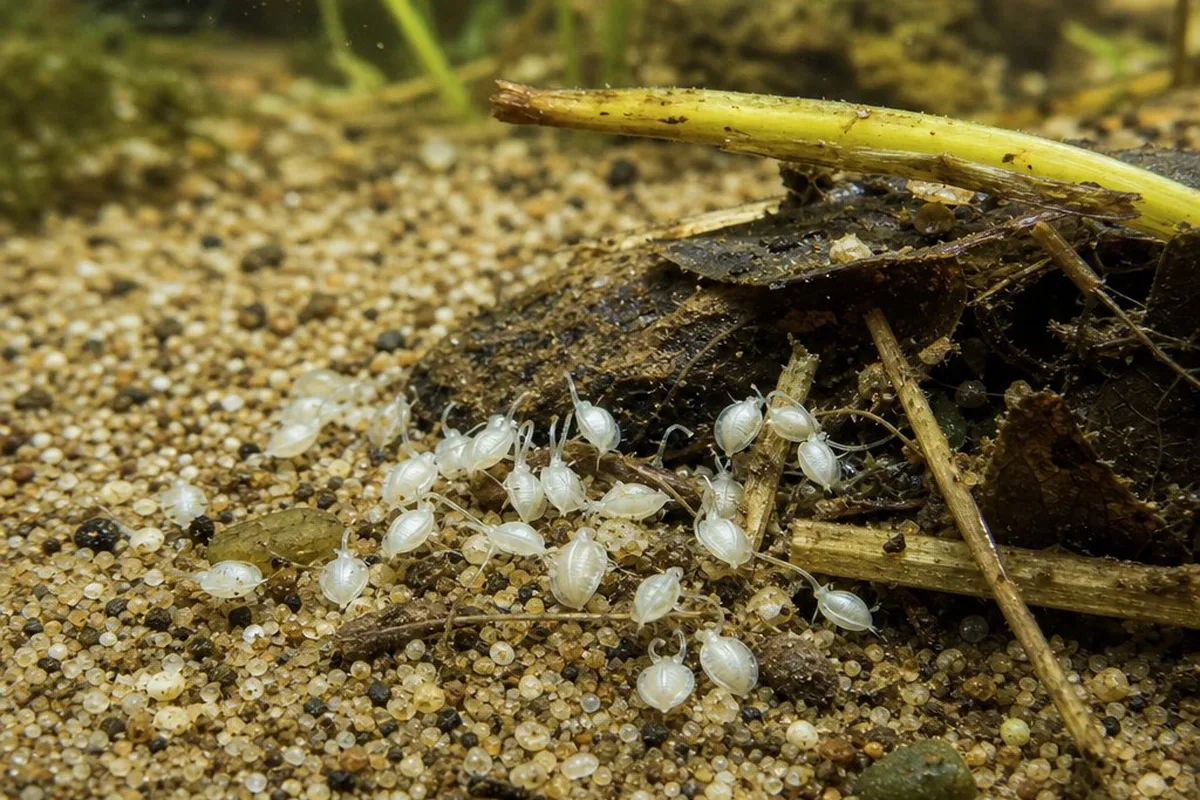
A turtle tank's high bioload tends to support small populations of scavenging organisms — detritus worms, planaria, and seed shrimp (ostracods) are common and generally harmless, covered in our guide to little white bugs in turtle tanks. Mosquito larvae are a separate situation tied to still water surfaces rather than organic waste, and many turtles eat them on their own — see our mosquito larvae guide for when that's not enough.