By Hektor Jorgo
A paludarium — part land, part water, in the same enclosure — is already a step beyond a standard aquarium. A brackish paludarium adds another layer: building that land/water combination around the salinity of a real mangrove or estuary, which is the actual native habitat of several popular "oddball" species that don't fit neatly into either a freshwater or marine tank.
Short Answer
A brackish water paludarium combines a land area and a shallow water area in one tank, with the water held at low brackish salinity (typically specific gravity around 1.005-1.010). This setup mirrors mangrove forests and estuary banks — environments where land, shallow brackish water, and deeper brackish water all exist within a few feet of each other, and where species like fiddler crabs, mudskippers, and certain brackish fish naturally move between zones. It's one of the few aquarium setups where genuinely semi-terrestrial animals and aquatic brackish species can share a single, cohesive habitat.
Planning the Land-to-Water Split
The single most important early decision is how much of the tank is land vs. water, and that decision should be driven by livestock, not aesthetics alone.
- Fiddler crabs and mudskippers are semi-terrestrial and need land or emergent basking areas they can climb onto — for a tank built around these species, a generous land slope isn't optional, covered in detail in our fiddler crabs and mudskippers guide
- Surface-dwelling brackish fish like four-eyed fish spend nearly all their time at the water's surface and need a wide, shallow water area more than they need land
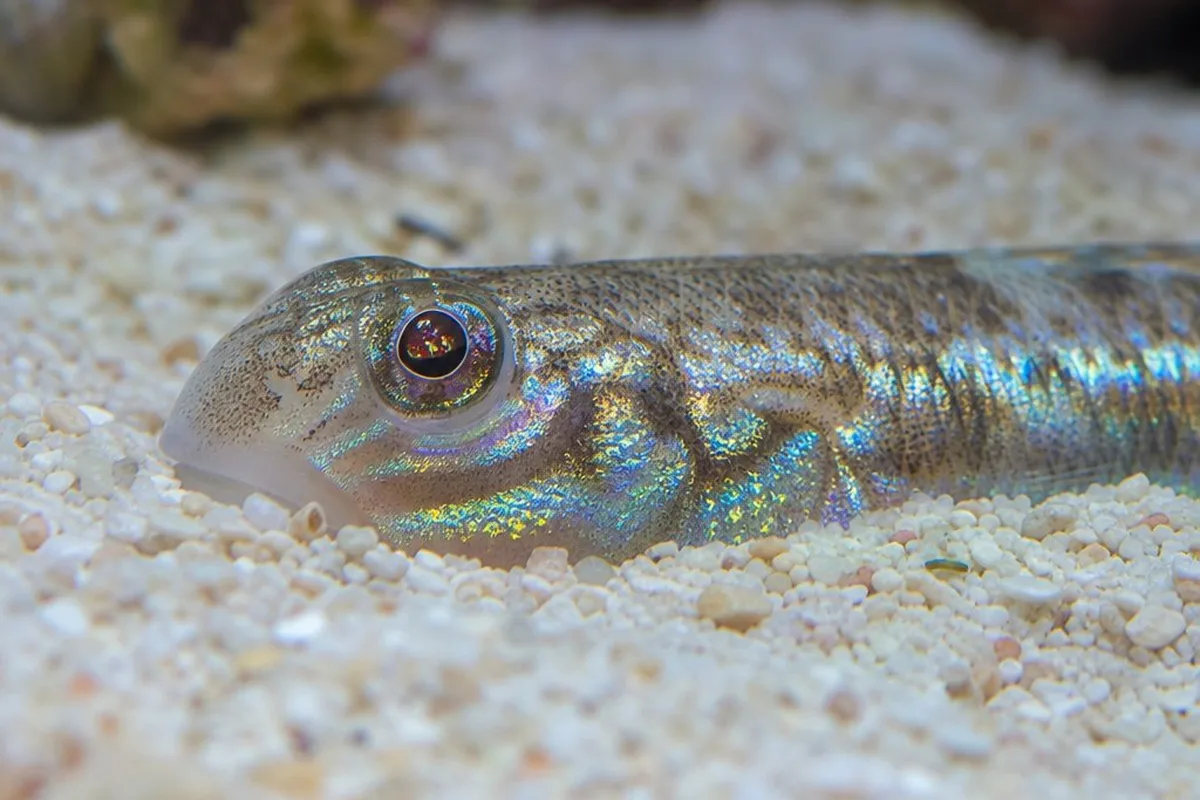
- Substrate-dwelling species like the dragon goby need a deep, soft sand footprint for burrowing, which competes with land area for the tank's floor space
Sketching out the rough footprint each intended species needs before building the hardscape avoids the common outcome of an attractive land area that leaves too little usable water for the animals that actually need it.
Substrate and Hardscape
Fine sand is the standard substrate choice, both for burrowing species and because it can be sculpted into a sloped bank between the land and water sections. An aragonite component, similar to the crushed coral used in some brackish and hard-water freshwater setups, helps buffer pH and hardness toward the alkaline side that many brackish species favor.
Driftwood, smooth rock, and mangrove-style root structures provide both visual structure and climbing/basking surfaces for semi-terrestrial inhabitants — functionally similar to the role driftwood plays in a cichlid tank, just adapted to a part-emergent setup.
Salinity and Water Movement
Most brackish paludariums target the lower end of the brackish range, roughly specific gravity 1.005-1.010, for two reasons: it's gentler on the limited plant options that can survive any added salt, and many of the classic paludarium species (fiddler crabs, mudskippers) come from estuarine zones where salinity is often on the lower side of "brackish" due to freshwater river input. The general principles of measuring and maintaining salinity are the same as in any brackish aquarium — a hydrometer or refractometer, marine salt mix, and freshwater top-offs for evaporation.
Water movement is typically kept gentle. Many paludarium inhabitants come from calm estuary pools and mangrove channels rather than fast-flowing rivers, and excessive flow can also accelerate the splashing and salt creep that already tend to be higher in an open-topped or part-open paludarium design.
Planting
Planting is one of the bigger departures from a standard freshwater paludarium. Mangrove propagules — young mangrove seedlings, grown partially submerged with their root systems in the water and leaves above — are a signature brackish paludarium plant, both for authenticity and because they're naturally adapted to exactly this kind of salinity gradient. Beyond mangroves, salt-tolerant emergent and marginal plants tend to do better than fully submerged freshwater species, most of which don't tolerate brackish conditions well.
Common Livestock Combinations
- Fiddler crabs + mudskippers — the most iconic brackish paludarium pairing, both semi-terrestrial and well-suited to a land-heavy layout
- Four-eyed fish — a surface-dwelling fish whose split-pupil eyes (covered in our four-eyed fish care guide) are adapted to exactly this kind of shallow, land-adjacent water
- Dragon gobies — substrate burrowers that can share deeper water sections, provided enough soft sand depth is available alongside the land area; see our burrowing behavior guide for how much space this actually requires
- Brackish-acclimated ghost shrimp — a smaller-scale addition for the water column, covered in our ghost shrimp in brackish water guide
Maintenance: Salt Creep and Evaporation
Because a paludarium has more exposed wet surface area relative to its water volume than a sealed aquarium, evaporation tends to be faster, and salts left behind by evaporating water can gradually concentrate in the remaining water (raising salinity over time) and build up as visible "salt creep" on glass and equipment near the waterline. The fix is consistent monitoring: check specific gravity regularly, top off evaporation with plain freshwater (never salt water), and periodically wipe down salt deposits with fresh water before they accumulate.
Quick Reference
- Plan the land-to-water ratio around your intended livestock before building hardscape
- Target low brackish salinity, roughly SG 1.005-1.010, for most paludarium builds
- Use fine, aragonite-buffered sand for both substrate chemistry and sculpting land slopes
- Favor mangrove propagules and salt-tolerant emergent plants over submerged freshwater plants
- Fiddler crabs and mudskippers need genuine land/basking area, not just a small rock
- Monitor specific gravity regularly and top off evaporation with freshwater only
- Wipe down salt creep on glass and equipment near the waterline periodically