By Hektor Jorgo
"Top 10 freshwater fish" lists tend to repeat the same handful of beginner staples — and there's nothing wrong with those fish, but they're not the only interesting things you can keep in a freshwater tank. This roundup covers a few species and varieties that stand out for reasons beyond just being easy or colorful.
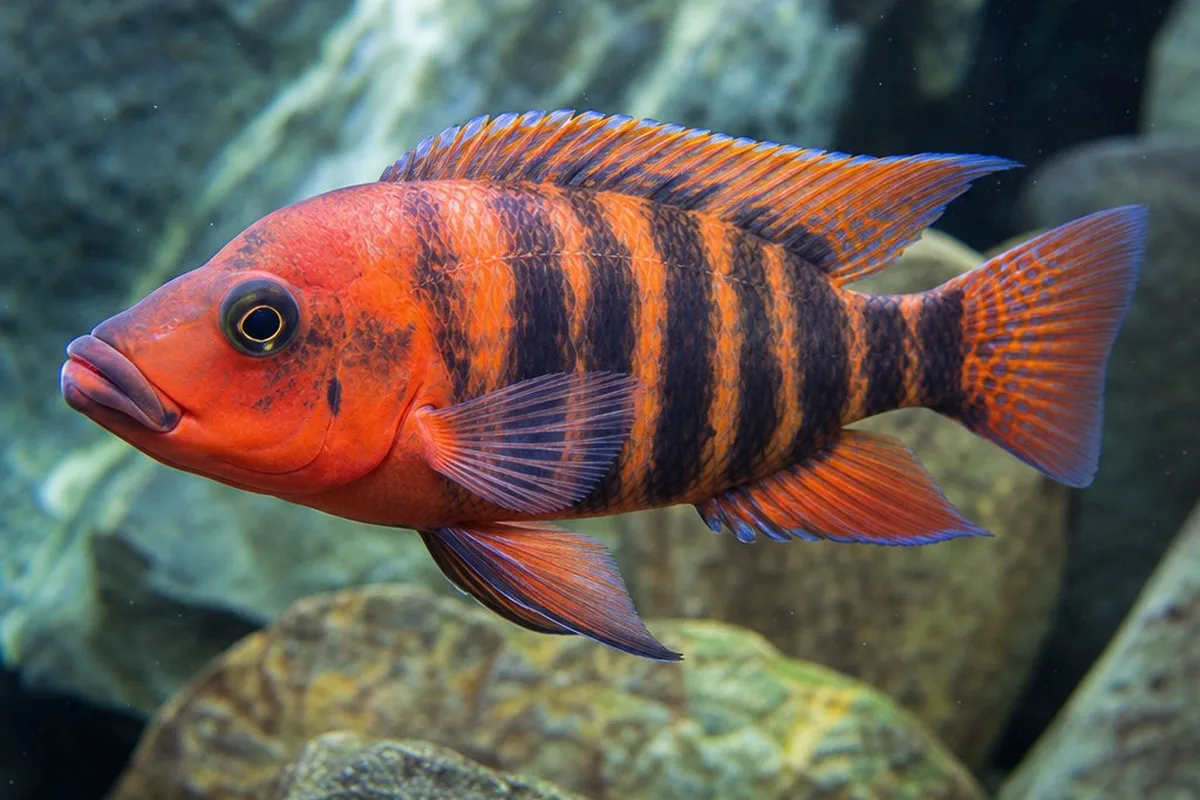
A Hybrid With No Fixed Identity: Red Tiger Motaguense
The red tiger motaguense is "cool" in an unusual way: it's a hybrid trade name, not a single recognized species, drawing on Central American cichlid lineages from the Motagua River region. The practical upshot is that no two individuals look quite the same — color intensity and barring pattern vary noticeably between fish, a direct consequence of hybrid genetics rather than inconsistent labeling. At 10-12+ inches and needing a 75+ gallon tank, it's also a serious commitment, not a casual purchase.
An African Cichlid Beyond the Usual Mbuna: Kyoga Flameback
Most "African cichlid" discussion centers on Lake Malawi mbuna, but the Kyoga Flameback comes from a different system entirely — Lake Kyoga in Uganda's Lake Victoria basin. Mature males develop a distinctive orange/red "flame" patch along the back, and at 4-5 inches with somewhat less relentless aggression than many mbuna, it's a way to explore African cichlid keeping outside the most commonly discussed group.
Two Takes on the Same Fish: Severum Color Morphs
The white severum and red-headed severum are both color morphs of the same species, Heros severus, taken in opposite directions — one toward an overall pale body, the other toward a bold red-orange head patch on a gold or green body. Both are also unusually peaceful for large cichlids, and both are commonly recommended discus tankmates.
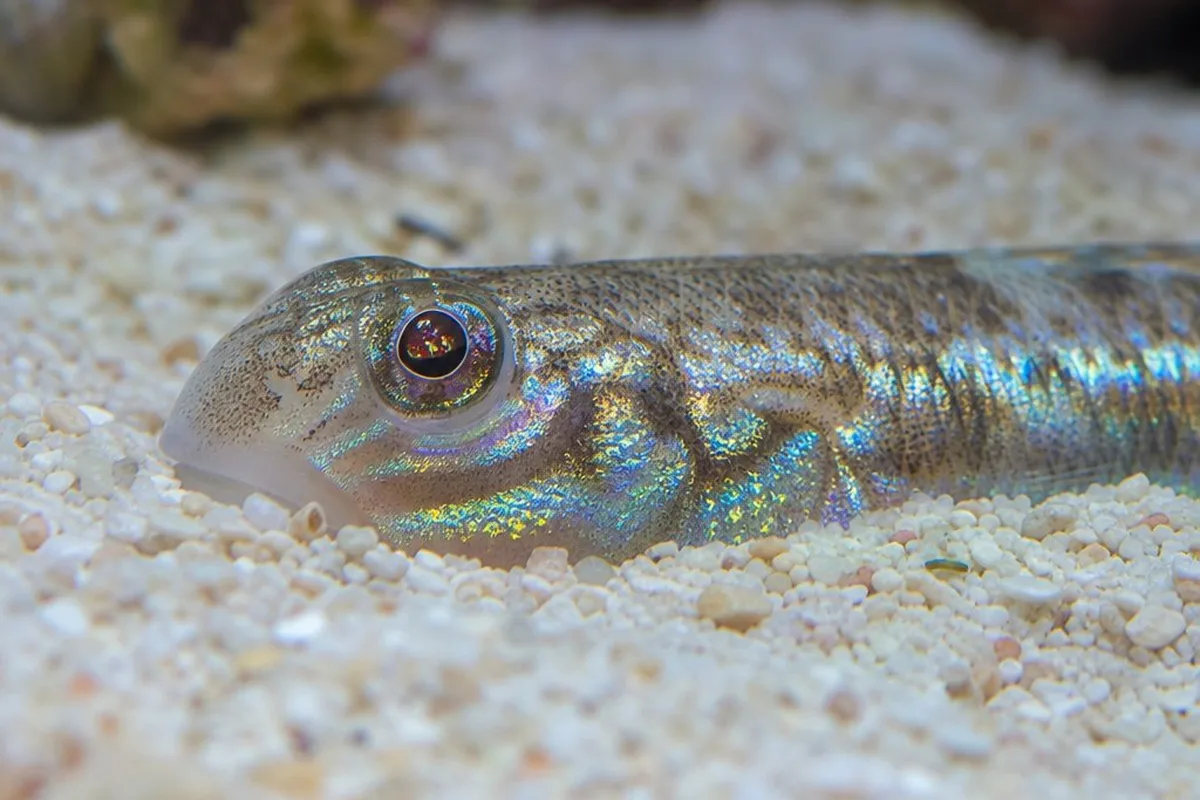
A Genuinely Odd-Looking Goby: Dragon Goby
The dragon goby looks like very little else commonly kept in freshwater or brackish setups — an elongated, eel-like body with a distinctive face, and behavior (including burrowing) that's worth understanding before adding one to a tank. It's a good example of a fish that doesn't fit neatly into "colorful community fish" or "large cichlid" categories.
Schooling Fish With Built-In Iridescence: Rainbowfish
Rainbowfish earn their name honestly — their scales show genuine iridescent color shifts depending on lighting and angle, something static photos don't always capture well. They're also active, continuous breeders, which is a plus for anyone interested in observing fish behavior (including breeding behavior) on an ongoing basis rather than as a rare event.
The Strangest Biology Here: Argentine Pearl Fish
The Argentine pearl fish makes this list almost entirely on biology rather than looks (though it's an attractive fish too). As an annual killifish, its eggs are adapted to survive dry periods in their natural habitat by entering a dormant state (diapause) that can last weeks to months — a strategy covered in more depth in our guide to fish egg hatching times, where it stands out as the major exception to "eggs hatch within days."
Two More Oddballs: A Surface Glider and a Living Leaf
Two species worth adding to this list come from opposite ends of the "ambush predator" spectrum. The African butterfly fish has broad, wing-like pectoral fins that let it glide above the water when launching itself at insects from the surface — and the same fins make it a notorious jumper in an uncovered tank. The Amazon leaffish goes the opposite direction entirely: rather than gliding or striking from the surface, it disguises itself so completely as a drifting dead leaf — shape, color, and even the angle it holds itself at — that prey often doesn't recognize it as a fish at all until it's too late. Both are genuinely strange-looking fish once you know what to look for, and both come with feeding requirements (live insects for one, live fish fry for the other) that are worth understanding before buying.
Quick Reference
- Red tiger motaguense: hybrid trade-name cichlid with individual-to-individual color variation
- Kyoga Flameback: Lake Victoria basin African cichlid, distinct from Lake Malawi mbuna
- White and red-headed severum: two color morphs of the same species, both good discus tankmates
- Dragon goby: an unusual-looking, burrowing goby that doesn't fit typical "community fish" categories
- Rainbowfish: schooling fish with genuine iridescent coloration and continuous breeding behavior
- Argentine pearl fish: an annual killifish with dormant, diapause-capable eggs
- African butterfly fish: a surface-gliding ambush predator with wing-like fins and a strong jumping instinct
- Amazon leaffish: a live-food predator that camouflages itself as a drifting dead leaf
- Each species links to a full care guide covering tank size, diet, and tankmates