By Hektor Jorgo
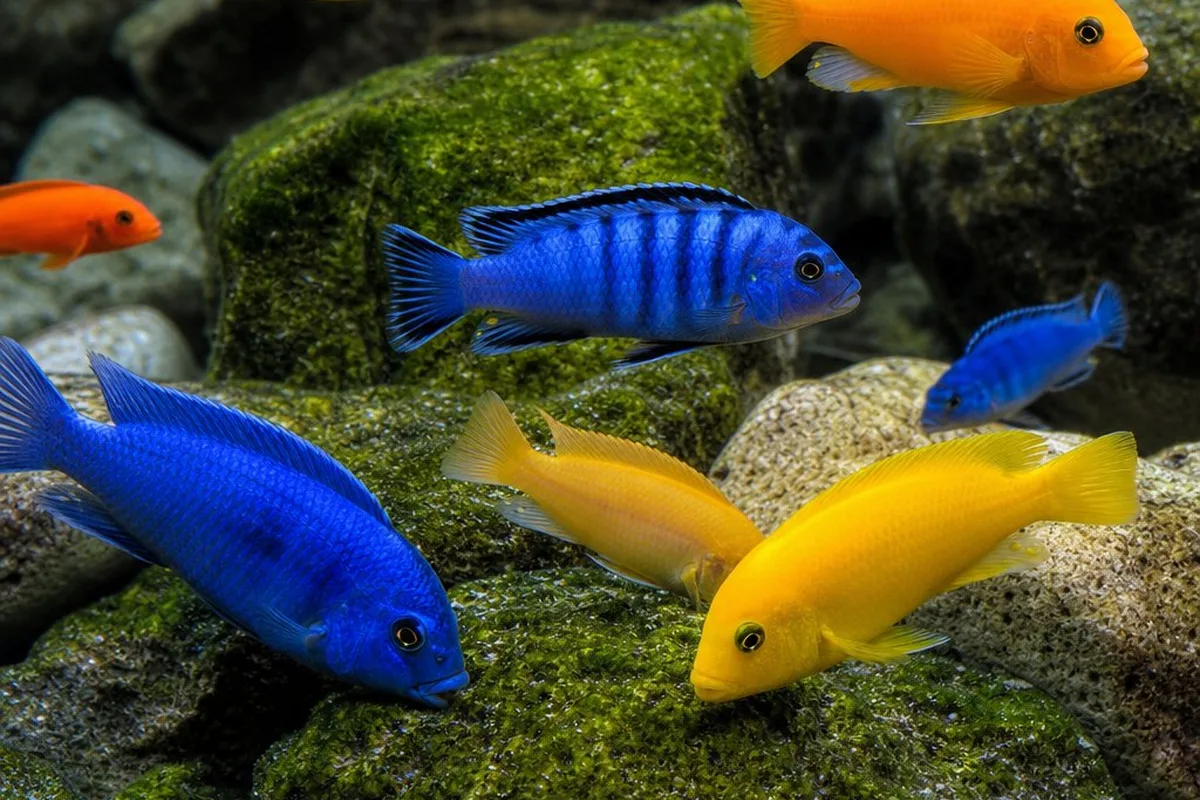
A 75-gallon tank sits in a genuinely good spot for peacock cichlids (Aulonocara species) — large enough to support a real community with multiple males and females across several color forms, but not so large that it requires a different scale of equipment and maintenance than a dedicated hobbyist typically runs. The harder question isn't whether 75 gallons "works" — it's how to divide that space between species, sexes, and (if you're mixing groups) other Lake Malawi cichlids.
Short Answer: Stocking a 75-Gallon Peacock Tank
A well-balanced 75-gallon peacock cichlid tank typically holds 8-12 fish, structured as several male/female groups — roughly one male to three or four females per species or color form — rather than a tank full of single pairs or an even male/female split. This ratio reduces aggression toward females and reduces cross-species hybridization risk. Substrate should be fine sand, water should match Lake Malawi parameters (hard, alkaline — pH 7.8-8.6), and tankmates should generally be other peacocks or peaceful Malawi haps rather than more aggressive Mbuna.
Why Peacock Cichlids Are Different From Mbuna
Peacock cichlids and Mbuna are both Lake Malawi cichlids and are often discussed together, but they occupy different niches and have different temperaments:
- Habitat: Mbuna are rock-dwellers; peacocks are more associated with sand and the transition zones between rock and open water, where males display over territories dug into the sand.
- Temperament: Peacocks are generally more peaceful than Mbuna, particularly toward other species — though males can still be territorial toward other males with similar coloration, which is part of why stocking choices matter.
- Diet: As covered in our Mbuna diet guide, Mbuna are predominantly herbivorous grazers with a real risk of bloat from rich diets. Peacocks are more omnivorous and somewhat more tolerant of varied diets, though they still benefit from a diet that isn't dominated by fatty, protein-heavy foods.
This combination — more peaceful, more colorful (particularly males), and slightly more flexible in diet — is a big part of why peacocks are often recommended as an entry point into Lake Malawi cichlids for keepers who want the look of African cichlids without the more demanding aggression management that a tank of Mbuna requires.
How Many Peacocks Fit in 75 Gallons
8-12 individuals is a commonly cited range for 75 gallons, but the composition of that number matters more than the raw count:
- Multiple species/color forms, each represented by one male and 3-4 females — for example, three color forms at a 1:3 ratio gives 4 males and 12 females, which is more than the 8-12 range suggests is comfortable. A more realistic plan for 75 gallons might be 2-3 color forms, each with one male and 3 females, totaling 8-12 fish.
- Avoiding multiple males of the same or visually similar color forms in a tank this size — two similarly colored dominant males in 75 gallons is a common source of persistent aggression, more so than the total fish count alone would suggest.
- Leaving room for "extra" females relative to males specifically to spread out male attention, rather than treating peacocks as simple pairs.
Building a Stocking Plan
- Choose 2-3 visually distinct color forms. Picking peacocks that look clearly different from each other (rather than several similar blue or similar red forms) reduces both male-on-male aggression and the chance of accidental hybridization if any spawning occurs.
- Plan for one male per color form, with 3-4 females each. This is the core ratio that makes peacock stocking work at this scale — resist the temptation to add a second male of a color form "for variety," as this is one of the more common sources of ongoing aggression in an otherwise well-planned tank.
- Decide on Mbuna or no Mbuna early. If you want the more vivid Mbuna alongside peacocks, research specific Mbuna species' aggression levels carefully and consider sizing up beyond 75 gallons. If you'd rather avoid that complexity, peaceful Malawi haps are a more compatible pairing with peacocks than most Mbuna.
- Add fish gradually, similar to the stocking pace recommended for marine tanks — adding an entire stocking list at once to a newly cycled tank doesn't give the biological filtration time to catch up, regardless of which type of fish is involved.
Tank Setup Considerations
Substrate: Fine sand is strongly preferred — peacocks sift sand for food and dig shallow pits as part of normal territorial and feeding behavior, and sand is gentler on the fish than coarse gravel.
Aquascaping: A mix of open sand area (for peacock display and digging behavior) and rockwork piles (for territory division between males of different color forms) works well. Unlike a Mbuna tank, which often leans heavily toward rock cover throughout, a peacock-focused tank benefits from more open swimming space.
Water chemistry: Lake Malawi parameters — hard, alkaline water (pH roughly 7.8-8.6) — are important for long-term health across all Lake Malawi cichlids, peacocks included. Crushed coral or aragonite substrate/rock can help maintain this, though as covered in our driftwood and cichlid tank guide, some common aquascaping materials (like driftwood) work against this chemistry and need to be used thoughtfully if at all.
Quick Reference
- 75 gallons: target 8-12 peacock cichlids across 2-3 visually distinct color forms
- Ratio: roughly 1 male to 3-4 females per color form — avoid multiple males of similar coloration
- Substrate: fine sand for natural sifting/digging behavior
- Aquascaping: balance of open sand and rockwork territory divisions
- Water: hard, alkaline (pH 7.8-8.6) — matches Lake Malawi conditions
- Tankmates: other peacocks or peaceful Malawi haps; Mbuna require careful species selection and more space
- Add fish gradually, not all at once, even in a 75-gallon tank