By Hektor Jorgo
Sometimes sold under the name "cow goby" for its mottled brown-and-cream markings — and also known as the banded or bridled goby — Amblygobius phalaena is a peaceful, reef-safe fish that spends most of its day doing something genuinely useful: continuously sifting the sand bed for food, which keeps the substrate aerated and helps process detritus. It's an easy fish to recommend on temperament and reef compatibility, but its core feeding behavior makes the sand bed itself one of the most important "equipment" decisions for keeping it well.
Appearance and Natural Range
The cow goby has a stocky, elongated body in mottled shades of brown, tan, and cream, often with a horizontal stripe or row of darker blotches running along the sides — the irregular, patchy pattern that gives rise to the "cow" comparison. Adults reach up to about 5.5 inches (14 cm), making it one of the larger commonly kept gobies, though its body shape and bottom-dwelling habits mean it doesn't need the open swimming space a fish like the blue hippo tang requires.
A. phalaena is found across the Indo-Pacific, typically in shallow lagoons and reef flats with sandy or rubble substrate — habitats that directly shape its core behavior in the aquarium, where it spends the majority of its time at or just above the substrate, picking through sand.
The cow goby is also a useful reference point for the goby family generally — its stocky body, bottom-dwelling habits, and substrate-sifting behavior are fairly representative of what "goby" means across the huge number of species in this family, covered in more general terms in our overview of gobies.
Tank Requirements
Tank Size
A minimum of 30 gallons is generally recommended, less because of the fish's own size requirements and more because of the sand bed area needed to support its natural sifting behavior. A 30-gallon tank with a generous, fine sand bed across most of the footprint serves this species better than a larger tank with minimal sand area.
Aquascaping — The Sand Bed Is the Priority
This is the section that matters most for this species. A. phalaena needs a fine sand bed at least 2-3 inches deep across a meaningful portion of the tank floor — not a thin dusting, and not crushed coral, which is too coarse for the sifting behavior this fish relies on for both feeding and natural behavior. Our crushed coral vs. live sand comparison goes into more depth on why substrate choice matters so much for sand-sifting species like this one.
Rockwork should leave open sand areas rather than covering the entire bottom — a common aquascaping approach that prioritizes rock coverage for corals can inadvertently leave a sand-sifting goby with very little usable substrate. If your tank design is rock-dominant, this is a fish to reconsider, or to plan sand areas around specifically.
Water Parameters
| Parameter | Target Range |
|---|---|
| Temperature | 75-82°F (24-28°C) |
| Salinity | 1.023-1.025 SG |
| pH | 8.1-8.4 |
| Ammonia / Nitrite | 0 ppm |
| Nitrate | <10 ppm (reef tanks) |
| Alkalinity | 8-11 dKH |
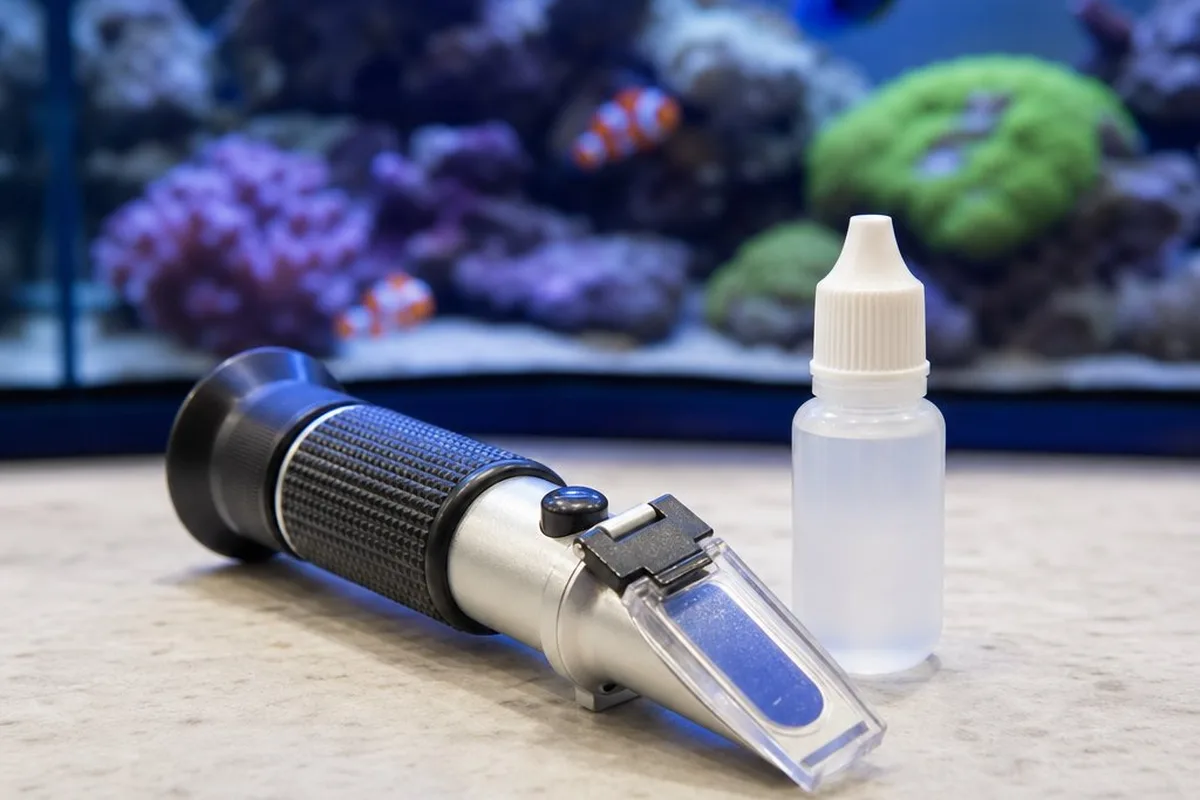
Standard reef parameters apply — as with most fish on this site, keeping specific gravity stable matters as much for the tank's overall health as for this species specifically.
Diet and Feeding
In the wild and in a well-established tank, A. phalaena spends much of the day sifting sand through its gills, filtering out copepods, small worms, and other microfauna, along with detritus and organic matter. This natural foraging is a major part of its diet — but in a newer tank, or one with a less biologically rich sand bed, natural food sources may not be sufficient on their own.
A complete feeding approach includes:
- Established sand bed with natural microfauna — the foundation, and a major reason this species does better in mature tanks than brand-new setups
- Sinking pellets or frozen foods (mysis, finely chopped meaty foods) offered near the substrate, where this bottom-dwelling fish will find them more readily than food that stays in the water column
- Feeding 1-2 times daily, watching for the fish to actively forage — a cow goby that stops sifting and shows reduced body weight over time may not be getting enough from the sand bed alone and needs more direct feeding
Tank Mates and Compatibility
Cow gobies are peaceful toward other species and make good additions to a community reef tank, with a couple of specific considerations:
Good tank mates:
- Common clownfish, cardinalfish, and other peaceful mid-water fish that don't compete for sand-bed territory
- Snails, hermit crabs, and other cleanup crew invertebrates — no predation risk, unlike the caveat that applies to the chain link moray eel
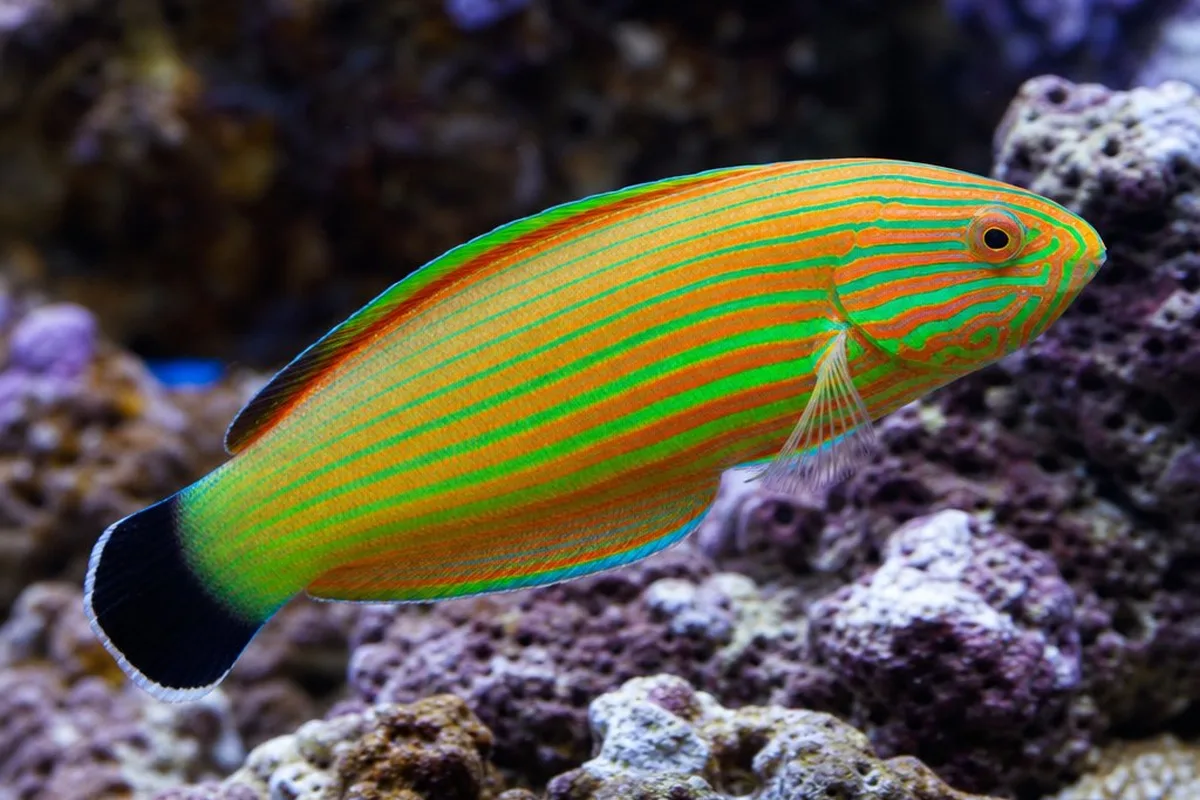
- Wrasses like the melanurus wrasse, which occupy a different feeding niche (active hunting vs. sand sifting) despite some overlap in habitat use
Considerations:
- Other gobies of the same or similar species — territorial conflict over sand-bed area is the main compatibility risk with this species, particularly in smaller tanks
- Aggressive or boisterous tankmates that might out-compete a generally unhurried, methodical forager for food
Quick Setup Checklist
- Tank: 30+ gallons with a substantial fine sand bed area (2-3+ inches deep)
- Avoid crushed coral or very thin sand layers — sifting behavior requires fine, deep sand
- Leave open sand areas in aquascaping rather than covering the entire bottom with rock
- Salinity 1.023-1.025, temperature 75-82°F, standard reef parameters
- Allow the tank to mature before adding — established sand bed microfauna supports natural feeding
- Supplement with sinking pellets/frozen foods 1-2x daily, especially in newer tanks
- Avoid housing with other gobies of the same/similar species in smaller tanks
- Compatible with cleanup crew invertebrates — no predation risk