By Hektor Jorgo
Few fish are sold with more misleading care information than the betta (Betta splendens). Walk into almost any pet store and you'll find bettas housed in tiny unheated cups, often with packaging suggesting a bowl or vase is an adequate permanent home. It isn't. Bettas are tropical fish with specific temperature, water quality, and space needs — this guide covers what they actually require, beyond the marketing.
Appearance and Fin Types
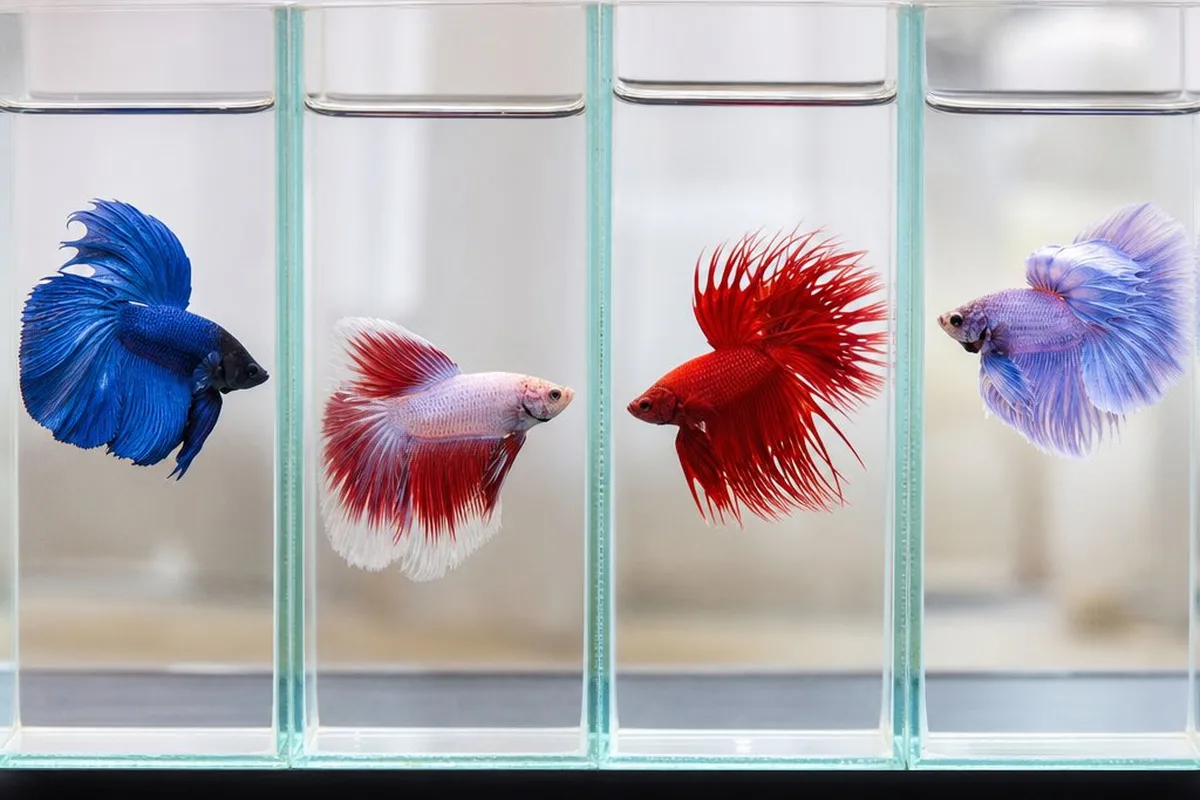
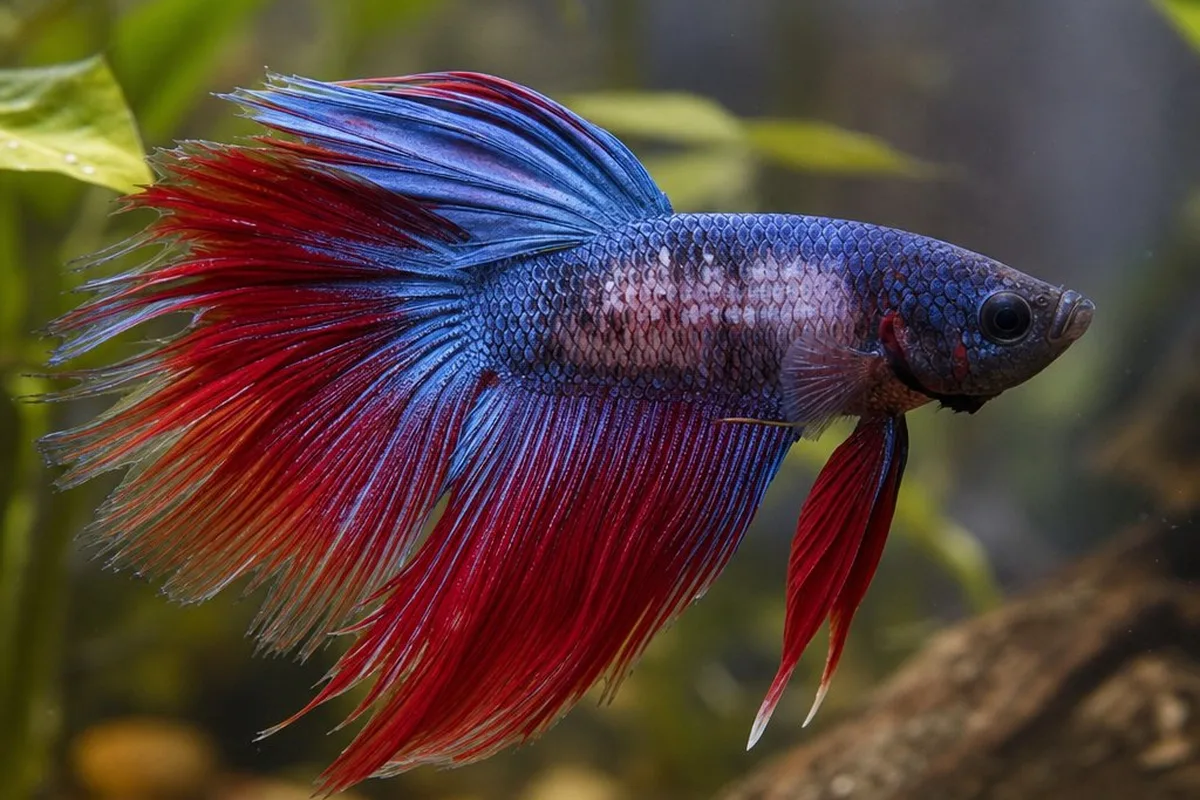
Wild bettas are relatively modest in coloration; the spectacular finnage and colors associated with the species are the result of over a century of selective breeding, primarily in Thailand. Common fin types in the pet trade include:
- Veiltail — the most common, with a long, trailing tail fin that droops downward
- Halfmoon — tail fin spreads to a 180-degree "half moon" shape when flared
- Crowntail — fin rays extend beyond the membrane, creating a spiky, "crown" appearance
- Plakat — shorter-finned, closer to the wild type, often more active swimmers
Fin type matters for care in one practical way: long-finned varieties (veiltail, halfmoon) are more prone to fin rot and have more difficulty swimming against strong current, so filter flow should be gentle for these fish.
Tank Requirements
Tank Size
5 gallons (19 liters) is a realistic minimum for a single betta, heated and filtered. While bettas can survive in smaller volumes, water parameters (temperature, ammonia) are dramatically harder to keep stable in less water — a small fluctuation in a 1-gallon bowl is a major swing; the same fluctuation in 5+ gallons is far more gradual and manageable.
Larger is generally better: a 10-gallon tank gives you more stocking flexibility (room for live plants, maybe a few peaceful tank mates) and an even more stable environment, for only marginally more cost and maintenance than a 5-gallon.
Heating
A heater is not optional in most homes. Bettas need water in the 76-82°F (24-28°C) range. Most homes sit at 68-72°F — well below this. A small adjustable heater (25-50W for tanks under 10 gallons) with a thermometer to verify actual tank temperature (heater dials are not always accurate) is standard equipment, not an upgrade.
Filtration
A gentle filter — sponge filters are popular for betta tanks because they provide biological filtration with minimal current — helps process ammonia from waste and uneaten food. Long-finned bettas in particular struggle against strong filter output, so if using a standard hang-on-back filter, consider baffling the output (e.g., with a sponge or filter floss) to reduce flow.
Decor and Hiding Spots
Bettas appreciate plants (live or silk — avoid sharp plastic plants, which can tear delicate fins), caves, and floating betta logs or leaf hammocks (bettas naturally rest near the surface and will use floating decor as a resting platform). A tight-fitting lid or minimal air gap helps maintain humidity above the water line, which bettas use to breathe via their labyrinth organ.
Water Parameters
| Parameter | Target Range |
|---|---|
| Temperature | 76-82°F (24-28°C) |
| pH | 6.5-7.5 |
| Ammonia / Nitrite | 0 ppm |
| Nitrate | <20 ppm |
| Water hardness | Soft to moderately hard (2-15 dGH) |
Bettas have a labyrinth organ that lets them breathe atmospheric air at the surface, which is part of why they're marketed as tolerant of "low oxygen" conditions — but this is not the same as tolerating poor water quality. Ammonia and nitrite toxicity affect bettas the same as any other fish; the labyrinth organ only addresses dissolved oxygen, not waste buildup. For more on how this organ fits into fish respiration generally — and why most fish don't have this option — see our guide to why fish can't breathe air.
Diet and Feeding
Bettas are carnivores with small stomachs (roughly the size of their eye). Feed:
- High-quality betta-specific pellets as a staple (look for fish meal as a primary ingredient, not fillers)
- Occasional frozen or live foods (bloodworms, daphnia, brine shrimp) for variety and enrichment
Feed small amounts 1-2 times daily — typically 2-4 pellets per feeding for an adult betta, adjusted based on body condition. Overfeeding is extremely common and contributes to both water quality issues and constipation/bloating in bettas, which can resemble swim bladder problems.
Tank Mates
The honest answer is: a betta alone in a properly set up tank is a completely valid, low-stress setup, and many experienced keepers prefer it. If you do want tank mates:
- Never house two male bettas together — they will fight, often to the death, due to intense territorial aggression.
- Male/female pairs are generally not recommended outside dedicated breeding setups; males can injure females.
- Other species, in a 10+ gallon planted tank: small schooling fish that don't resemble bettas in shape or color (avoid long fins and bright red/blue), bottom-dwellers like corydoras catfish, and snails have the best track records — but individual betta temperament varies enormously, and some bettas will harass or be harassed by almost anything.
Always have a contingency plan (spare container/tank) when trialing tank mates, and monitor closely for the first few days after any introduction.
Common Health Issues
- Fin rot — frayed, discolored fin edges, often linked to poor water quality or, in long-finned varieties, physical damage from sharp decor or strong flow. Early-stage fin rot often resolves with water quality correction alone.
- Fungal infections — cottony white or grey growths, usually secondary to fin rot, injury, or poor water quality. See our betta fungal infections guide for identification and treatment.
- Skin peeling — distinct patches where skin appears to lift or slough off can signal chemical burns, columnaris, or a parasitic infection. Our betta skin peeling guide covers how to tell these apart.
- Swim bladder issues / bloating — often diet-related (overfeeding, especially dry pellets that expand). Occasional fasting days and pre-soaking pellets can help.
- Velvet and ich — parasitic infections presenting as a fine gold dust (velvet) or white spots (ich); both are treatable but easier to prevent via stable water quality and avoiding unquarantined tank mates.
Quick Setup Checklist
- Tank: 5+ gallons (10 recommended), with a lid
- Heater maintaining 76-82°F, verified with a separate thermometer
- Gentle filter (sponge filter or baffled output) — especially for long-finned varieties
- Plants/decor with smooth edges + a resting spot near the surface
- Betta pellets as staple, 2-4 pellets 1-2x daily
- Plan for a betta-only tank unless you've researched specific tank mates and have a backup plan