By Hektor Jorgo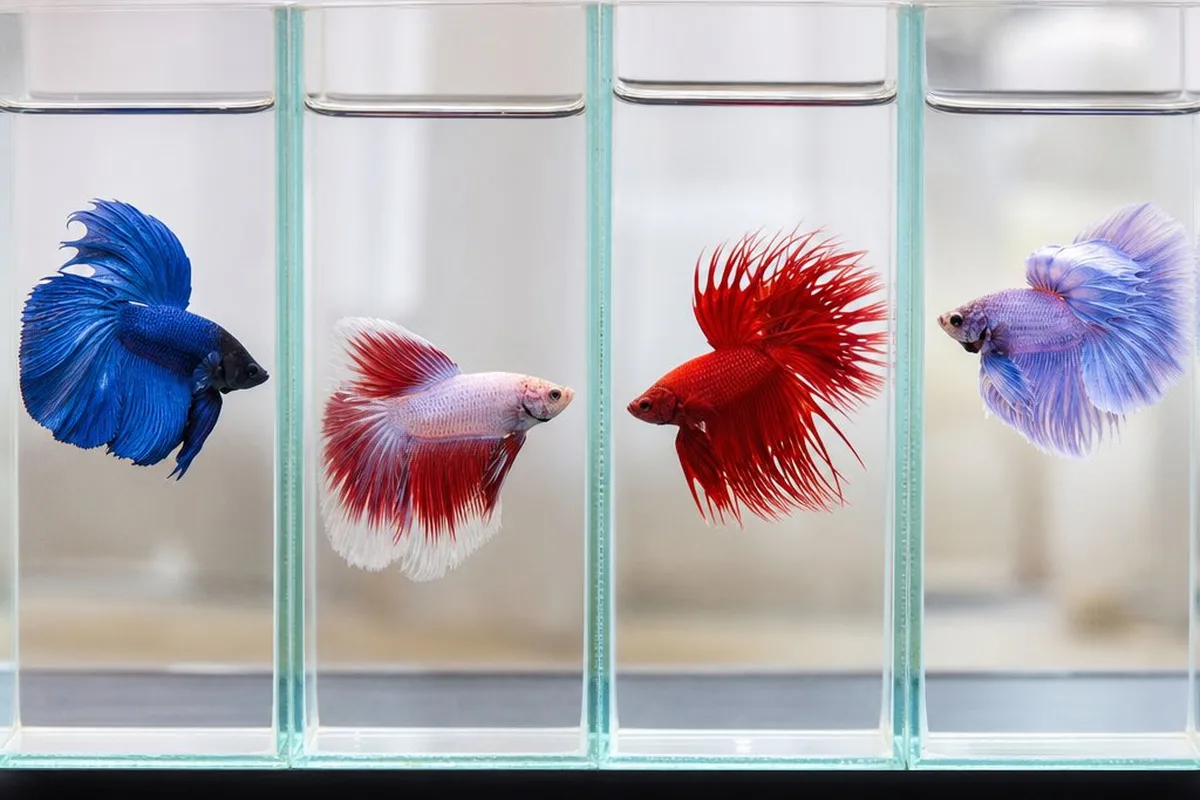
Search for "betta fish" and you'll quickly run into a wall of unfamiliar terms — veiltail, halfmoon, crowntail, plakat, dragon scale, koi, galaxy — often with little explanation of what any of it actually means. The good news is that almost all of these terms describe the same species (Betta splendens), and the differences between them are mostly about fin shape and color pattern rather than fundamentally different fish with different needs.
Short Answer
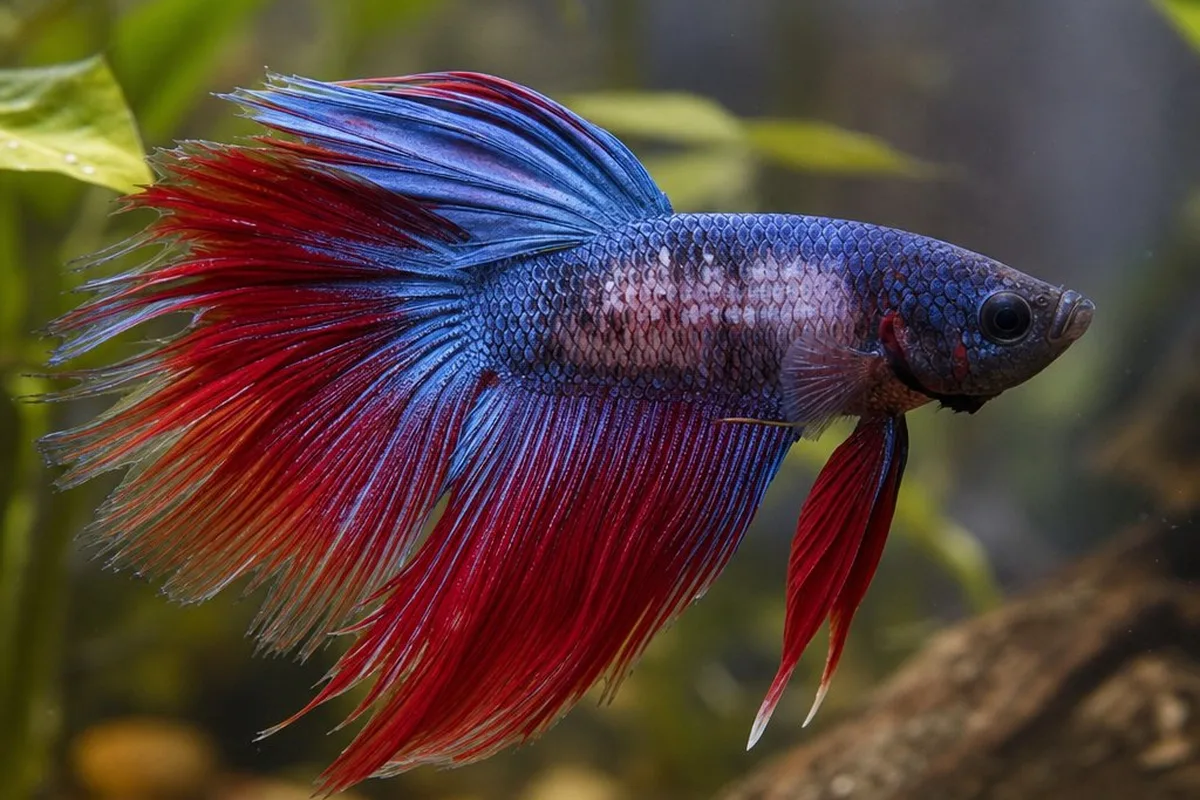
The betta fish sold in pet stores — regardless of how exotic the name sounds — are almost always Betta splendens, selectively bred over generations into a wide range of fin types (veiltail, halfmoon, crowntail, plakat, and others) and color/pattern varieties (solid colors, marble, koi, dragon scale, and many more). Fin type affects a few practical care details (mainly water flow and fin-damage risk), but color and pattern are purely cosmetic. For the actual care requirements — tank size, heating, filtration, water parameters — see our betta care guide, which applies across virtually all varieties.
Fin Types Explained
Fin type is the most visually obvious way bettas are categorized, and it's the result of over a century of selective breeding in Thailand and elsewhere. Common types include:
- Veiltail — the most widely available and typically least expensive type. The tail fin is long and trails downward in an asymmetric, flowing shape. This is the fin type most commonly seen in the small cups bettas are sold in at general pet stores.
- Halfmoon — when fully flared, the tail fin spreads into a flat semicircle (180 degrees), creating a dramatic, symmetrical display. Halfmoons are generally considered a premium variety.
- Crowntail — the fin rays (the structural "spokes" of the fin) extend beyond the webbing between them, giving the fins a spiky, crown-like appearance. Crowntails can range from subtle to extreme, depending on how far the rays extend.
- Plakat — short-finned, closer to the wild-type body shape. Often more active, agile swimmers than long-finned varieties.
- Halfmoon plakat — a short-finned variety that still flares into a half-moon shape, combining traits of plakat and halfmoon types.
- Double tail — the tail fin is split into two lobes, often paired with a wider dorsal fin. Double-tail bettas can be more prone to spinal curvature issues due to the genetics involved in the trait.
- Dumbo / elephant ear — characterized by unusually large, broad pectoral fins that resemble ears.
The practical takeaway: long-finned varieties (veiltail, halfmoon, crowntail, double tail) are more prone to fin rot and struggle more against strong water flow, so gentle filtration and smooth decor — both covered in our betta care guide — matter more for these fish than for short-finned plakats.
Color and Pattern Varieties
Beyond fin shape, bettas are bred for an enormous range of colors and patterns. Some of the most commonly seen names include:
- Solid / single color — one consistent color across the body and fins (red, blue, yellow, white, black, and others)
- Bicolor — body and fins are distinctly different colors
- Marble — irregular patches of color that can actually continue to change over the fish's lifetime, due to a transposable gene affecting pigmentation
- Koi betta — a marble-pattern variety with red, orange, black, and white patches reminiscent of koi carp
- Galaxy — a pattern combining iridescent, multicolored scales with metallic sheen
- Dragon scale — thick, pearl-like scales that create a heavily armored, metallic appearance, often obscuring the base color underneath
- Butterfly — a band of one color on the body with a contrasting band of color (often white) along the outer edge of the fins
None of these patterns change a betta's care requirements — they're entirely cosmetic, the result of selective breeding for pigmentation genes rather than anything affecting the fish's biology or needs.
Wild Bettas vs. Domestic Bettas
It's easy to assume "betta" refers to one specific look, but the genus Betta actually contains more than 70 recognized species. The vast majority of bettas in the pet trade — across all the fin types and colors described above — are Betta splendens, the species that's been the focus of generations of selective breeding for ornamental traits.
Other Betta species, like Betta imbellis (peaceful betta) or Betta smaragdina (emerald betta), occasionally show up through specialty breeders or local fish clubs, but they're uncommon compared to B. splendens and may have different temperaments or care nuances. Wild-type B. splendens itself looks quite different from the ornamental varieties — more muted in color, with shorter fins closer to a plakat's proportions — since the dramatic finnage and colors are entirely a product of selective breeding, not something found in nature.
Care at a Glance
Regardless of fin type or color, the fundamentals are the same for essentially all pet-trade bettas:
- 5+ gallon tank minimum, heated to 76-82°F and gently filtered
- Stable water quality — 0 ppm ammonia/nitrite, low nitrate
- Carnivore diet of betta-specific pellets, with occasional live/frozen foods
- One betta per tank in almost all cases — males in particular are highly territorial toward other bettas
For the full breakdown of tank setup, heating, filtration, diet, and tank mate options, see our complete betta care guide. If you're noticing changes in your betta's fins or skin — cottony growths, fraying, or patches that look like peeling — our guides to betta fungal infections and betta skin peeling cover those specific issues.
Quick Reference
- Almost all pet-trade bettas, regardless of fin type or color, are Betta splendens
- Fin types (veiltail, halfmoon, crowntail, plakat, double tail, dumbo, and others) are about shape, not species
- Color and pattern (marble, koi, dragon scale, galaxy, and others) are purely cosmetic
- Long-finned varieties are more prone to fin rot and need gentler water flow
- Core care requirements (tank size, heating, water quality) are the same across virtually all varieties
- Wild Betta splendens looks much more muted than ornamental varieties — the dramatic look is bred, not natural
- For full setup details, see the betta care guide